



Your pet's care changes as they get older because what matters most to their health shifts with them. The first year is dense with visits because a puppy or kitten is building protection from scratch, with vaccines spaced a few weeks apart as the antibodies from their mother fade. Once that foundation is set, the focus turns to catching change early, and bloodwork is what finds it, often long before anything looks wrong at home. Size and build move the timeline too: a large dog is considered senior years ahead of a small one, and flat-faced breeds carry their own concerns at every age.
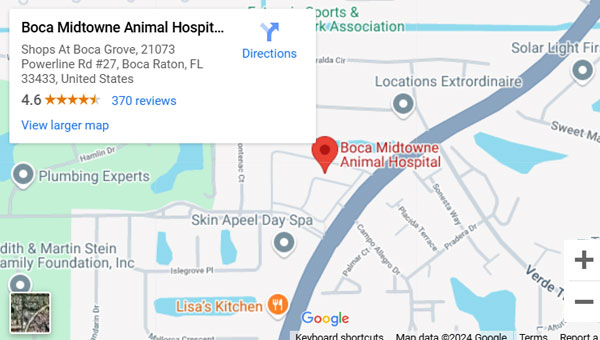
Boca Midtowne Animal Hospital has followed dogs and cats in Boca Raton from their first vaccine series into old age, and knowing your pet over years is what lets us catch the change a single visit would miss. Our AAHA-accredited hospital fits the plan to your pet, from the puppy and kitten schedule to the wellness exams and bloodwork that carry the adult and senior years. The first year brings your pet in many times, and as a Fear Free certified hospital, we keep those early visits calm so care stays easy on them for the next decade. If you are unsure what your pet needs at the age they are now, come see us in Boca Raton.
Pet Life Stages: The Basics
- Your pet's first year is the busiest of their life, with vaccines and parasite prevention, dental habits, and socialization all on windows that close.
- Adult visits settle into a yearly rhythm, shifting from building immunity to catching small changes in weight, teeth, and bloodwork.
- Pets seven and older do best with exams twice a year and a panel covering kidneys, liver, thyroid, and urine, since early organ changes don't show at home.
- Breed and size move every date on the calendar, so a Great Dane, a Chihuahua, and a cat each get a different version of the same plan.
What Does My Pet's Care Look Like at Each Age?
Most dogs and cats move through four stages, and the job changes along the way: building protection, holding it, then watching for change. Size shifts those boundaries, so our doctors go by what they see on exam and in bloodwork rather than a birthday.
| Life stage | Rough age range | How often we see them | What the visit is for |
| Puppy / kitten | 8 weeks to 12 months | Every 3 to 4 weeks, then at spay/neuter | Vaccine series, deworming, growth, behavior, surgery timing |
| Young adult | 1 to 3 years | Once a year | Adult boosters, dental baseline, breed-related surgical decisions |
| Adult | 3 to 7 years | Once a year, twice for some | Weight, dental care, lifestyle-based vaccines, baseline bloodwork |
| Senior | 7+ years, earlier for large breeds | Twice a year | Full screening panel, pain and mobility checks, quality of life |
Why Does a Puppy or Kitten Need So Many Visits in the First Year?
Antibodies from the mother's first milk, called colostrum, protect a newborn for a few weeks and also block the response to early vaccinations, so the series runs every three to four weeks until about 16 weeks. Every appointment is also a full physical exam, which is how heart murmurs, umbilical hernias, and retained baby teeth get caught early. Our team builds your pet's vaccination plan around their age and household.
Do Puppies and Kittens Really Need Parasite Prevention This Young?
Many puppies and kittens already carry intestinal parasites when they arrive home, passed across the placenta or in their mother's milk, so deworming starts at the first visit rather than after a positive stool test. In Boca Raton, where mosquitoes never go away, heartworm prevention stays on the schedule every month of the year, indoor-only cats included, and flea, tick, and intestinal parasite protection follows the same year-round logic. Our online pharmacy stocks the products we prescribe, matched to your pet's size and species.
When Should My Pet Be Spayed or Neutered?
The old six-month rule for spay or neuter timing still fits many cats and small-to-medium dogs, but large and giant breeds often do better waiting until their growth plates close, since the sex hormones help determine how joints finish developing. Spaying eliminates the risk of pyometra, a uterine infection that can send a dog or cat into emergency surgery, and it lowers mammary tumor risk. Neutering eliminates the risk of testicular cancer and reduces roaming and marking. We perform spay and neuter procedures here, and we'll give you a window based on your pet's breed, projected adult size, and health.
How Early Can I Start Brushing My Pet's Teeth?
Start as soon as your puppy or kitten comes home: the habit is far easier to build in a 12-week-old than in a five-year-old who has never had fingers in their mouth. Work from a few seconds of muzzle handling up to a finger brush and an enzymatic toothpaste made for pets. Daily brushing is the most effective thing a family can do at home for dental care, and wipes and water additives cover the days brushing doesn't happen.
What Is the Socialization Window, and How Do I Use It Safely?
The window for socialization opens around three weeks and starts closing by 14 weeks in dogs and as early as nine weeks in cats. It closes before the vaccine series finishes, so the answer is controlled exposure rather than isolation: carry them through a hardware store, have friends over in boots and hats, and walk them on grass, tile, and metal at home, while skipping dog parks and pet-store floors until the series is done. For kittens the work happens indoors, with daily paw and ear handling and a carrier left open in the living room so it doesn't only mean a car ride.
Which Surgeries Are Best Done While a Pet Is Still Young?
Structural problems a pet is born with tend to get worse over time, so correcting them early spares years of damage.
- Airway: Narrowed nostrils, an overlong soft palate, and a narrow windpipe add up to brachycephalic obstructive airway syndrome. We provide BOAS laser surgery here, and opening the airway early can spare a French Bulldog or a Persian years of working just to breathe.
- Eyelids: Lids that roll inward (entropion) rub the cornea with every blink, and lids that sag outward (ectropion) leave the eye chronically irritated. Surgery is what fixes either one.
- Umbilical hernias: A tiny opening in the body wall over the belly button is easy to fix at the time of spay and neuter. Left open, it can increase in size and become a risk for entrapping abdominal organs.
- Teeth and bite: Retained baby teeth and misaligned bites can drive a lower canine into the roof of the mouth, which hurts constantly and is simpler to fix early.
- Hips: Hip dysplasia found on X-rays in a young dog is sometimes a surgical decision and always changes what we recommend for exercise and weight.
What Happens at an Adult Wellness Visit?
A yearly wellness exam is one of the most important parts of your pet’s health care. Our nose-to-tail wellness exams cover body condition scoring, the belly, the heart and lungs, the teeth and gums, joint range of motion, and the eyes and ears, plus a lifestyle review that sets which vaccines and parasite products your pet needs. It's also where we recommend baseline bloodwork while your pet still feels well.
Why Does Dental Disease Need Attention Every Year?
Dental disease is one of the most common diagnoses in adult dogs and cats: 80% of dogs and cats over the age of three have periodontal disease, and the damage happens below the gumline, so it's often further along than the mouth looks. How often varies: small breeds with crowded mouths and cats prone to painful tooth resorption often need yearly attention, while a large dog whose family brushes may go longer.
Do Vaccines and Parasite Plans Change After the First Year?
Adult vaccine and parasite plans are built around how your pet lives, so they can shift from year to year. A dog who boards, does daycare, or travels shares air with dogs from other households, where kennel cough and canine influenza can move quickly. The same logic covers Lyme disease for dogs who travel north, feline leukemia for cats who go outside, and broader tick coverage for pets in brush. Heartworm, intestinal parasite, and flea coverage should continue without fail, and we’ll recommend testing for heartworm disease, tick-borne diseases, and intestinal parasites yearly.
How Much Does a Few Extra Pounds Matter in Middle Age?
A few extra pounds matter a great deal, because extra weight raises the risk of arthritis, diabetes, and breathing trouble, which flat-faced breeds can least afford in South Florida heat. In national pet obesity surveys, more than half of dogs and cats carry extra weight, so measure the food with a measuring cup, count treats in the daily total, and feed to a target body condition rather than to the chart on the bag. Keeping your pet lean is one of the best ways to keep your veterinary bills low.
What Does Senior Screening Include, and Why Twice a Year?
A senior pet can look completely normal at home and still show early kidney, liver, or thyroid changes on preventive testing. For pets seven and older, we recommend two exams a year, because six months is a long time at that age. For families who want more contact than that, our concierge veterinary care membership is worth asking about.
A full panel usually means a complete blood count, a chemistry panel for organ function, thyroid testing, a urinalysis, and a blood pressure reading. Depending on the pet, we may also recommend X-rays or ultrasound to screen for heart disease or certain cancers.
What Problems Do We Catch Most Often in Senior Pets?
Most of what senior screening turns up is manageable when we find it early.
- Joints: Osteoarthritis affects many senior dogs and far more cats than get diagnosed, and weight control, joint support, and prescription pain management change how a pet moves day to day.
- Hormones: Thyroid disease and diabetes in both species show on routine panels, and early treatment can avoid the crisis that brings untreated pets in sick.
- Organ decline: Chronic kidney disease, liver problems, heart disease, and more often appear in lab work months or even years before symptoms show. Catching these early expands treatment options and can add significant time to your pet’s life.
- Cancers: As pets live longer, cancer becomes more common. Testing of lumps and bumps can tell us what’s okay to monitor and what needs to be removed right away.
- Blood pressure and eyes: Untreated hypertension can cause retinal detachment and sudden blindness, and glaucoma is a separate problem, found by measuring the pressure inside the eye.
- Brain: Cognitive dysfunction isn't reversible, but diet, supplements, enrichment, and a predictable routine at home can slow it down.
Does My Pet's Breed Change the Senior Plan?
Breed and size tell us what to watch for and when to start watching, so two eight-year-old dogs in the same waiting room can be on different plans. Here’s a few of the most common breed-associated risks:
| Breed or build | What we watch for | What that changes |
| Golden Retrievers, Rottweilers, Bernese Mountain Dogs, Boxers | Lymphoma, mast cell tumors, hemangiosarcoma, and osteosarcoma | These breeds reach senior status earlier, so screening starts sooner. We may recommend additional testing to look for certain cancers. |
| Cocker Spaniels, Basset Hounds, and northern breeds like Huskies and Malamutes | Glaucoma, a painful rise in pressure inside the eye | Eye pressure checks become part of senior exams, and a red, cloudy, or squinting eye is a same-day visit, because vision can be lost within hours |
| Cavalier King Charles Spaniels and other small breeds | Heart valve disease | Mitral valve disease often shows up as a soft murmur years before a cough, and tracking it with chest X-rays or an echocardiogram tells us when medication should start |
| Ragdoll and Maine Coon cats | Hypertrophic cardiomyopathy, a thickening of the heart muscle | Heart screening can find it before symptoms. Fast breathing at rest or sudden back-leg weakness or pain is an emergency |
| Persian cats | Polycystic kidney disease, where fluid-filled cysts slowly replace kidney tissue | Kidney bloodwork, urine testing, and blood pressure checks start early, with an ultrasound or genetic test to confirm |
| Scottish Terriers, Westies, Shetland Sheepdogs, Beagles | Transitional cell carcinoma, a bladder cancer | Straining, blood in the urine, or a “UTI” that keeps coming back needs a closer look |
| German Shepherds, Boxers, Corgis | Degenerative myelopathy, a slow, painless loss of control in the back legs | Hind-end weakness, scuffed nails, or knuckling paws get a neurologic exam rather than being written off as arthritis |
| Long-backed dogs, plus French Bulldogs | Intervertebral disc disease, where the cushions between the bones of the spine bulge or rupture | We keep them lean for life and treat sudden back pain, wobbliness, or reluctance to jump as a same-day problem |
| Flat-faced dogs like Boxers, Boston Terriers, and Bulldogs | Brain tumors, plus airway narrowing that carries into old age | A first seizure or a sudden personality change in an older dog needs prompt testing. Heat and humidity in South Florida also make breathing harder, so weight control matters more every year |
A higher breed risk isn’t a diagnosis. It tells us where to look first, and many dogs and cats in these breeds never develop the condition they’re known for.
What Changes Should I Watch For as My Pet Gets Older?
The changes families write off as "just getting old" are often specific, treatable conditions that respond better the earlier we find them. What you notice at home is usually a habit rather than a symptom.
- Moving less, or differently: Arthritis changes habits before it changes gait, so a cat who stops jumping to the counter or a dog who hangs back on the walk may be telling you a joint hurts, and pain management often gets that movement back.
- Drinking and urinating more: Increased thirst points toward the kidneys, the thyroid, or diabetes, and you can track it at home by filling the water bowl from a measuring cup.
- Appetite and weight: A senior cat who eats well and still loses weight needs bloodwork, not a diet change.
- Confusion and sleep changes: Cognitive decline can look like pacing at 2 a.m. or forgetting a trained routine.
- Vision changes: Cloudiness or hesitation on stairs in dim light needs an eye exam soon rather than at the next annual visit.
How Will I Know When It's Time?
Quality-of-life conversations belong in ordinary senior visits, not in one terrible appointment at the end. Appetite, mobility, hydration, hygiene, and the ratio of good days to bad days are what quality-of-life assessments score. Score those at home, keep the pages, and bring them in. We'll go through the numbers with you and be honest about whether there's still comfortable time left.
What Families Ask Us About Changing Health Needs
My pet seems perfectly healthy. Do they really need annual bloodwork?
A healthy year is when bloodwork is most useful, because a panel run on a healthy pet establishes what normal looks like for them. Normal varies between individuals, so when a value shifts years later we can tell whether that's a real change or just how your pet has always been.
At what age is my dog or cat considered a senior?
Most dogs and cats are considered senior around seven, but size moves that more than anything else. Giant breeds like Great Danes are often treated as seniors by five or six, while small dogs and cats frequently stay in their adult plan until eight or nine.
Is anesthesia safe for my senior pet's dental cleaning?
Anesthesia is generally safe for a senior pet when it's planned around their health, because age itself isn't the risk. Unmanaged disease is. Before anesthesia we recommend bloodwork, listen carefully to the heart, and build a protocol around what we find, adjusting drugs and monitoring for an older patient. A painful infected mouth does real harm to a senior pet who's already managing other things.
Care That Fits Your Pet's Age
Wherever your dog or cat is on that timeline, Boca Midtowne Animal Hospital will meet them there. Book your pet's next visit and we'll build the plan that fits the age they are now. If something feels urgent, we see urgent care cases during our open hours, and we take emergency calls seven days a week until midnight, so call us first.











Leave A Comment