


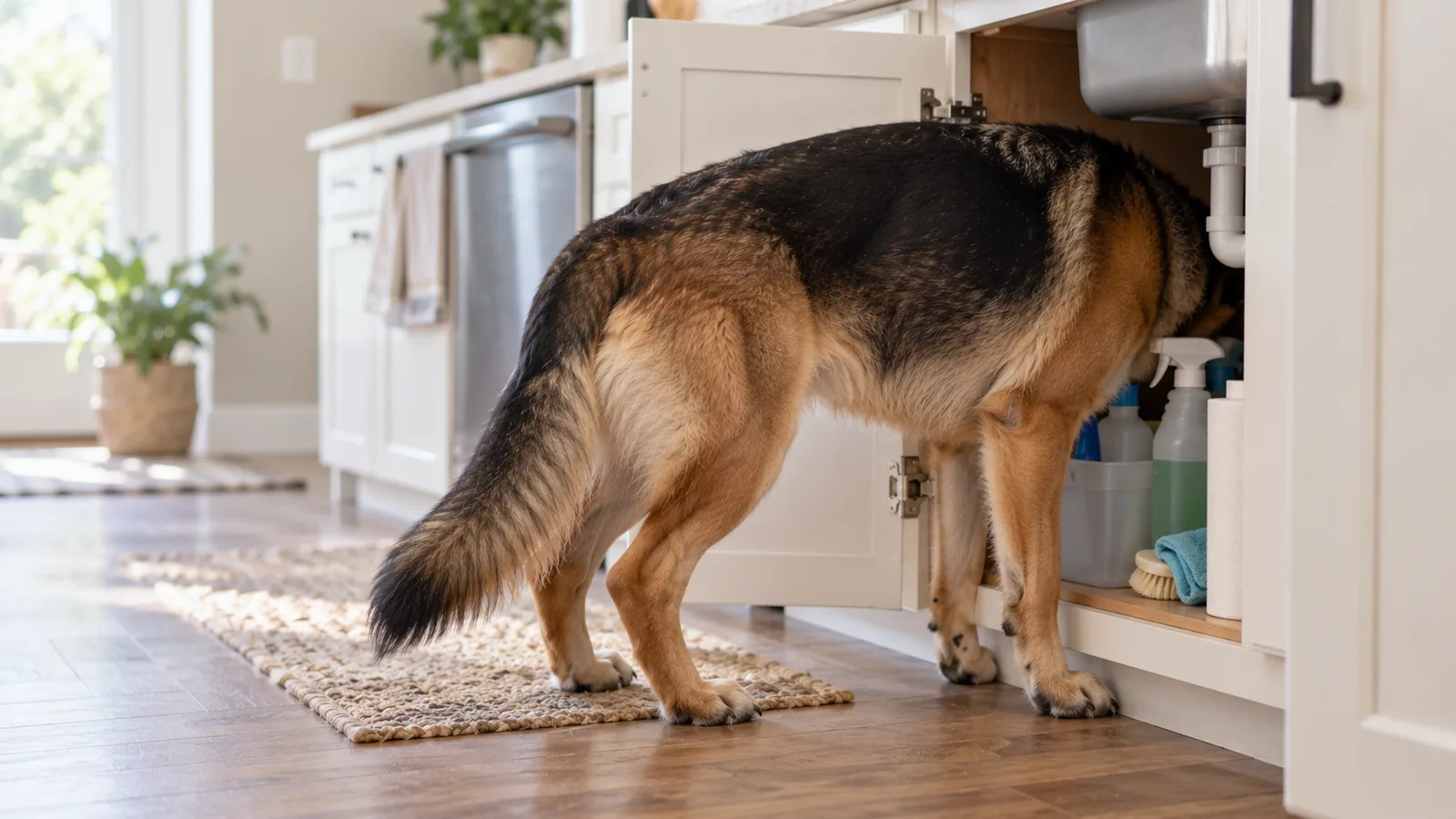
The things most likely to poison a dog or cat are ordinary household items, and the safest response to any of them is to call a veterinarian right away instead of waiting to see whether symptoms appear. That wait is the dangerous part, because some of the worst offenders, grapes and raisins and common human pain relievers among them, do their damage during hours when your pet still looks and acts completely normal. Others, like sugar-free gum and household cleaners, hit fast and hard, with drooling, weakness, or collapse showing up within minutes. The list of everyday dangers in a home is longer than it looks, running from the pantry to the medicine cabinet to the plants on the patio.
Boca Midtowne Animal Hospital in Boca Raton takes emergency calls seven days a week until midnight, because we would rather hear from you an hour early than a day late, and no one here will make you feel silly for worrying about a chewed-up wrapper. Our AAHA-accredited hospital has the in-house lab, digital X-ray, and ultrasound to find out what a swallowed item is actually doing inside your pet, and suspected poisonings are exactly the kind of case we keep room for with our urgent care availability. If your dog or cat gets into something Monday through Friday, call us right away and head in. If we are closed, go straight to the nearest 24-hour veterinary ER and reach a pet poison control hotline on the way.
The Fastest Way to Keep a Poisoning From Turning Serious
- Chocolate, sugar-free gum, grapes and raisins, and human pain relievers drive most of the poison calls in small animal medicine.
- Some toxins cause signs within minutes and others stay quiet for a day or two, so how your pet looks right now tells you very little.
- Don't induce vomiting at home unless a veterinarian or a poison control hotline tells you to, because a few substances do more damage coming back up.
- Grab the packaging or a photo of the label before you leave, since the exact active ingredient changes the whole treatment plan.
What Should You Do If Your Pet Is Exposed to a Toxin?
If your pet is exposed to a toxin, separate them from whatever is left and call a pet poison hotline before you do anything else. Don't induce vomiting on your own. If you call us or an emergency facility before a pet poison hotline, it may be recommended that you call the poison hotline first before coming in. They are the experts for knowing exactly what’s in a product and how it can affect your individual pet. What comes next depends entirely on the substance, and a phone call can tell you quickly whether this is a monitor-at-home situation or a get-in-the-car situation.
What Does Poisoning Look Like in a Dog or Cat?
Poisoning rarely looks like one specific thing. A change from your pet's normal matters more than matching signs to a list.
Tremors, seizures, collapse, sudden weakness, or vomiting that will not stop are a pet emergency, not a wait-until-morning situation. Milder changes deserve attention too: drooling, pawing at the mouth, diarrhea, sudden thirst, an unsteady walk, hiding, pacing, or gums that look pale or brick red. Cats are quieter about it. A cat who's suddenly under the bed and won't come out for dinner is telling you something. Our Fear-Free care with gentle handling makes a big difference when a pet is already disoriented or agitated from what they consumed.
What Are the First Steps After an Exposure?
The opening minutes are about containment and information, not treatment.
- Secure the scene first: Move your pet to a closed room and keep other animals away.
- Leave the vomiting to us: Hydrogen peroxide burns the stomach lining, salt is never safe for this, and a corrosive cleaner injures the throat a second time coming back up.
- Rinse out their mouth: Tap water to flush out any residual toxic material helps prevent further damage. Rinse their mouth so the water flows out; avoid letting them swallow it.
- Call while someone finds the carrier: The Pet Poison Helpline at 855-764-7661 and the ASPCA Animal Poison Control Center at 888-426-4435 are staffed overnight and open a case file we can pull up when you arrive. Their advice guides our treatment decisions.
- Bring the evidence: Packaging, the label, and anything your pet already vomited up so we have an idea of how much might be left inside them.
- Drive safely: A disoriented dog bolts, so a carrier or a seatbelt harness matters more than usual.
Write down what your pet got into, roughly how much, and when, then reach us to describe what you're seeing. Depending on what your pet ate, we may be able to see your pet for urgent care during our regular hours, or we may recommend you go directly to a veterinary ER if they’ve eaten something we don’t carry an antidote for or if we believe they may need overnight care.
Our after-hours virtual triage consults help you sort out what you're seeing when we're closed, and members of our Concierge Care service have direct access to Dr. Man’s cell phone and after-hours virtual appointments so you can get guidance quickly when you’re worried.
What Does Poisoning Treatment for a Pet Involve?
Treatment depends on what was swallowed and when. Decontamination, activated charcoal, IV fluids, specific antidotes, and repeat lab work over the next few days are the usual tools. Bloodwork and diagnostic testing gives us organ values while the exposure is still fresh, and repeating them over the following days shows whether treatment is holding and whether permanent damage was done.
If your pet ate something especially dangerous, hospitalization overnight at a veterinary emergency facility might be needed so their team can continue to administer medications and monitor their response. We’ll help arrange the transfer from our hospital to a specialty facility if needed, and pick their care back up afterward to continue to monitor their recovery.
What Everyday Household Items Are Poisonous to Dogs and Cats?
Most poisonings start in one of three places: the pantry, the cabinet under the sink, and the plants in your home or yard. Chocolate, sugar-free products, grapes, lilies, detergent pods, and antifreeze account for a large share of cases, and nearly all of them get eaten because something sat within reach for a minute. Halloween is an especially popular time for dogs to find chocolate and sugar-free candies, so be sure your buckets of candy are out of reach this season.
Which Human Foods Are Actually Dangerous for Pets?
- Chocolate and caffeine: Baking and dark chocolate pack several times the methylxanthines of a milk chocolate bar, and chocolate toxicity depends on how dark the chocolate was and how small the dog is. Coffee grounds, espresso beans, and energy drinks do the same thing, and the progression runs from restlessness and a racing heart to vomiting and tremors.
- Xylitol: Sugar-free gum, mints, some peanut butters, and a few toothpastes contain xylitol, which triggers a rapid insulin release and can crash a dog's blood sugar within 30 minutes, with liver injury possible at higher doses. A wobbly dog who raided a purse needs help now, not in the morning.
- Grapes and raisins: No dose is safe, no one can predict which dogs react, and the injury is acute kidney failure that begins well before your dog looks sick.
Kitchen Items that Are Easy to Overlook
| Food | What it can do | Timing |
| Onions, garlic, chives, leeks | Damages red blood cells and causes anemia, with cats especially sensitive | Signs often take 1 to 3 days |
| Macadamia nuts | Weakness in the back legs, tremors, and fever in dogs | Usually within 12 hours |
| Alcohol and raw yeast dough | Dangerous drops in blood sugar and body temperature, and dough keeps rising in the stomach | Under an hour |
| Fatty trimmings and cooked bones | Pancreatitis, plus obstruction risk from bone fragments | 12 to 72 hours |
| Heavily salted snacks and salt dough | Vomiting and tremors as sodium levels shift | A few hours |
What Household Products and Plants Belong Behind a Latch?
- Plants: A single vase of lilies is a true feline emergency, and the list of toxic and non-toxic plants is worth a look before a new houseplant comes home. Sago palms, African violets, ZZ plants, snake plants, and dieffenbachia are all popular houseplants that are toxic, and even pothos and philodendron species can cause oral ulceration and drooling. Spider plants, Boston ferns, calathea, and orchids make reasonable swaps.
- Essential oils: Licking an oil, contact through skin, and breathing in diffused oils are all a problem. Concentrated oils can cause tremors and liver injury, so a diffuser running in a closed room is worth rethinking in a cat household.
- Cleaners and garage chemicals: A chewed detergent pod brings drooling, retching, and a real risk of liquid reaching the lungs; antifreeze tastes sweet and very little of it will damage a cat's kidneys; pool chemicals belong sealed and up high.
- Rodent control: Bait is engineered to taste good, and rodenticide comes in several chemistries: anticoagulants that cause bleeding days later, bromethalin that swells the brain, and cholecalciferol that drives calcium high enough to damage the kidneys. The antidote for one does nothing for the others. The box matters more than the color of the pellets.
Never make your pet vomit after a corrosive product like drain cleaner, oven cleaner, or bleach.
Are Human Medications Really That Dangerous for Pets?
Human medications cause more poisoning cases in pets than any other category, and the reason is metabolism. Dogs and cats break down many common drugs far more slowly than people do, so one dropped ibuprofen tablet can injure a stomach or kidneys before anybody notices a pill is missing.
Which Prescription and Over-the-Counter Drugs Carry the Most Risk?
- Pain relievers: Ibuprofen and naproxen cause stomach ulcers and kidney injury at amounts a person wouldn't blink at, and acetaminophen damages red blood cells and the liver, with a single regular-strength tablet enough to kill a cat. Never give human pain medication to a dog or cat, not even once.
- Eye drops: Even a few drops from a chewed bottle can cause a drop in heart rate and blood pressure, vomiting, and neurologic symptoms.
- Psychiatric and heart medications: SSRIs, SNRIs, and ADHD stimulants cause agitation, tremors, a dangerously fast heart rate, and body temperatures that climb quickly, while a dropped beta blocker or calcium channel blocker can push heart rate and blood pressure low enough to cause collapse.
- Vitamins, topicals, and flea products: Iron in prenatal and gummy multivitamins causes bloody vomiting and liver damage, hormone creams transfer from skin to coat during a cuddle, and flea treatments labeled for dogs contain permethrin, which causes tremors and seizures in cats.
Storage does most of the work here. A dog who finds a pill organizer eats the whole week at once. A latched drawer beats a nightstand, and purses, backpacks, and guest luggage go on hooks instead of floors.
What Happens If My Dog Gets Into Marijuana or Another Drug?
Marijuana exposure has become one of the most common toxin exposures in pets, and one of the most treatable once we know what we're working with. Wobbly back legs, dribbling urine, and startling at small sounds are the classic picture of THC ingestion, and an edible makes it worse when the same brownie carries chocolate or a sugar substitute. Concentrates raise the stakes further, since butters, oils, and vape cartridges deliver far more per bite than dried flower.
Cocaine and methamphetamine cause seizures and dangerous body temperatures, while opioids and prescription sedatives cause heavy sedation and slowed breathing that reversal drugs can sometimes undo.
Please just be honest with us if you suspect your pet got into drugs or recreational substances. We ask so we can treat your pet correctly, not to judge anybody, and on a stumbling dog the difference between THC and antifreeze is worth minutes.
What Outdoor Hazards Should South Florida Pet Families Know About?
In a climate where plants stay lush and lawns get treated year round, what gets planted and how it’s cared for matters. Preventive care visits are a great time to ask us about what to watch out for.
| Outdoor hazard | Why it matters | What helps |
| Fertilizer, bone meal, blood meal | Stomach upset, pancreatitis, and a cement-like obstruction when packed meal is eaten | Keep off the grass until it is watered in and dry |
| Herbicides and weed killers | Irritation and vomiting from wet grass and licked paws | Follow the label's re-entry time and wipe paws after walks |
| Snail bait and insecticides | Metaldehyde snail and slug bait causes tremors, seizures, and a dangerously high body temperature within hours, and some garden insecticides cause drooling, vomiting, and muscle tremors | Choose pet-safer iron phosphate baits, keep granules and pellets out of reach, and treat any snail bait ingestion as an emergency |
| Cocoa mulch | Carries the same stimulants found in chocolate | Choose pine bark, cypress, or rubber mulch instead |
| Grill drippings and drip pans | Pancreatitis from fat, plus foil and skewers that can obstruct | Close the lid, empty the pan, take the trash out |
| Compost | Decomposing food produces mold toxins that cause tremors and seizures | Use a sealed bin or fence the pile off |
| Standing water and algae | Blue-green algae can be rapidly fatal to dogs who swim or drink | Keep pets away from scummy or paint-like water |
What Outdoor Plants Are a Problem for Pets?
South Florida landscaping is full of plants that range from mildly irritating to life-threatening, and many of them grow year round, so there's no off-season for curious chewers.
Sago palm fills half the landscaping beds in Boca Raton, and every part of the plant is toxic, with the seeds the most dangerous of all. The first signs are vague, usually vomiting, diarrhea, and lethargy, but the diarrhea can turn bloody and the toxin can go on to cause liver failure and bleeding problems. There's no antidote, and sago can be fatal even with fast treatment, so a pet who has chewed on any part of one needs to be seen right away rather than watched at home. Coontie, a native Florida plant that's often used in yards for its sago-like look, carries the same toxin and deserves the same respect.
Oleander, lilies, rosary pea, castor beans, crown of thorns, pencil cactus, philodendrons, pothos, elephant ears, and dieffenbachia are grown both indoors and outdoors in South Florida and are all toxic in their own ways. If your pet likes to snack on your landscaping, it’s worth a review of what’s growing in your yard.
Are Wild Mushrooms Dangerous for Pets in South Florida?
Some are, and South Florida's warm, wet weather means mushrooms can pop up in lawns any month of the year, often overnight after a summer storm. Most wild mushrooms and grocery store varieties are harmless, but a few can cause severe vomiting, seizures, liver or kidney damage, or death, and even experts have trouble telling them apart by sight.
Mushroom toxicosis doesn't always show itself right away. Some toxic species cause vomiting and diarrhea within a few hours. The most dangerous ones, certain Amanita species, may not cause signs for 6 to 12 hours or more, and a pet can seem to improve before liver failure sets in. That's why waiting for symptoms is the wrong move.
A few habits keep your yard safer:
- Walk the yard before letting your dog out, especially after rain, and pull up any mushrooms you find.
- Bag them in paper, not plastic, if your pet may have eaten one, so the mushroom can be identified.
- Call right away if your pet ate a wild mushroom, even if they seem completely fine.
Recreational "magic" mushrooms and mushroom-infused chocolate or edibles are a real poisoning risk and belong well out of reach.
How Do I Make My Home Safer for a Curious Dog or Cat?
Start low. Pet-eye level turns up what a standing adult misses: batteries, dropped pills, dental floss, and hair ties are dangerous household items that pets swallow more often than families expect.
Then work room by room. Pet-proofing your home comes down to latched cabinets, locking trash cans, plants out of reach, and wiping a spill before a curious tongue finds it. Garages and pool sheds want everything sealed and up off the floor, and yards get a scan for mushrooms and dropped fruit after storms. A reliable "leave it" has rescued more dogs than any latch ever will.
Puppies and kittens mouth everything and are light enough that a tiny amount goes a long way. Bring your questions to nose-to-tail wellness exams, where we can go through what is in your home.
Questions We Hear After a Pet Gets Into Something
How much chocolate is too much for my dog?
It depends on the type of chocolate and your dog's weight, which is why we'd rather run the numbers than guess. Milk chocolate in a large dog often causes nothing worse than an upset stomach, while dark or baking chocolate in a ten-pound terrier can bring tremors and heart rhythm problems. Call with the wrapper in hand and your dog's weight.
Is it ever safe to make my pet vomit at home?
It's only safe when a veterinarian or a poison hotline has told you to for that specific substance. Hydrogen peroxide causes serious stomach irritation, it doesn't work reliably, and it's never appropriate for cats. Corrosive products and petroleum-based liquids do damage on the way back out, and once material has moved past the stomach, vomiting only delays the treatment that would actually help.
My cat rubbed against a lily but never ate it. Does that count?
It counts, and it's worth calling right away. Pollen brushes onto the coat and goes straight down during the next grooming session, and every part of a true lily, including the water in the vase, can cause kidney failure in cats. Easter, tiger, day, Asiatic, and stargazer varieties make up the dangerous group, while peace lilies and calla lilies belong to a different family and cause mouth irritation instead. When you're unsure which one is in the vase, bring a photo or the whole stem.
Staying Ahead of the Next Close Call
Most poisoning stories end well, and the ones that end best start with somebody calling early, wrapper still in hand. Boca Midtowne Animal Hospital sees frightened families in Boca Raton having the worst afternoon of their month, and the outcome is almost always better when the call came first. Book a visit for a set of eyes on your dog or cat and a prevention plan built around your home and your yard, or call us about urgent care for your dog or cat if you’re worried right now.











Leave A Comment